I encountered the Java Sparrow in Hawaii where little flocks of Java swarmed nearly every area with a chance of finding some leftover food, in parks, in malls and on beaches. They just couldn’t help themselves.
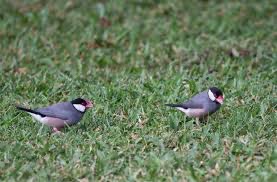
Java sparrow, although native to Indonesia are now found in places such as Hawaii (especially Oahu), Puerto Rico, Mexico, Fiji and Christmas Island. Whilst also being prominent and prized pets of China’s Ming Dynasty and Japan’s Edo period.
Whilst not a true sparrow, actually belonging to the estrildid finch family (Estrildidae), it is commonly named a sparrow due to its small-brown and chirpy appearance. The Java sparrow is easily recognisable: About 15-17cm, grey upper parts/breast, pink belly, black head with prominent white cheeks, a gorgeous red eye ring + thick nut crunching beak and pink feet. Whilst juveniles are browner/duller in colour until adult.
As I said they love to be social, they form flocks up to hundreds of Java and communicate in soft “chip” calls and a rapid series of said notes which forms their song. Strong bonds between pairs exist within flocks and they often stay very close to their mates.
In the wild the Java sparrow prefers open and cultivate rice paddies, also often settling in urban areas. They feed on grains and were originally considered pests in rice paddies which is where their scientific name oryzivora (“rice eater”) comes from. In the wild Java sparrow mainly feed on seeds and grains -especially cereal crop, rice (which made them famous) and occasionally fruits and insects.
Despite being widespread/introduced regions and being in captivity the Java sparrow is considered and classified as endangered on the IUCN red list with fewer than 10,000 individuals in the wild, they are threatened by habitat loss, pet trade and being killed by farmers. Conservation efforts include habitat protection and captive breeding programmes aimed at eventual reintroduction.

:Photo from Reddit
 Oli's Ecology Blog