Every step you take, you unearth an entire ecosystem nobody pays attention to, an entire separate world that if ceased to exist, would cause ours to suffer completely.
A small yet ubiquitous part of that world is electrogenic bacteria.
Spectacularly, electrogenic bacteria effectively ‘breathe’ electrons, they have infinite potential for energy systems. Clean electricity – no smoke, no carbon, just power.
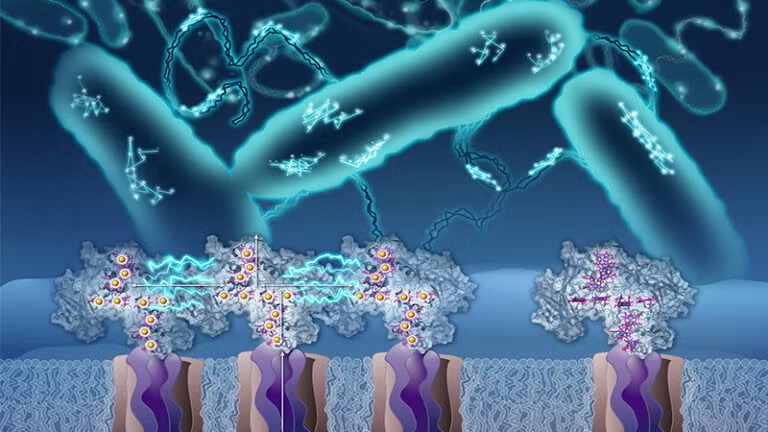
That’s the promise of microbial fuel cells (MFCs), bio-electrochemical systems that use living microorganisms to convert organic waste directly into electricity. This technology is paving a way forward for zero carbon energy generation, pollution into power.
At the heart of every MFC, microscopic powerhouses known as electrochemically active bacteria (EAB) work tirelessly. These remarkable microbes are nature’s electrical engineers capable of transferring electrons either out of or into their cells, completing an electrical circuit much like wires in a battery.
EAB are divided into two electrifying types:
- Electrogenic bacteria generate electricity by sending electrons from their metabolism directly to an electrode, acting as living anodes.
- Electrotrophic bacteria do the opposite, they consume electrons from an electrode, functioning as living cathodes.
- Some of these bacteria thrive under extreme conditions where most life can’t survive. They are known as extremophiles, they can handle high temperatures, salinity or acidity . These tough microbes prove that electricity can be generated anywhere, even in extreme environments.
Microbial fuel cells don’t just produce clean electricity, they can also treat wastewater and even recover valuable metals or nutrients through bioleaching. Every discovery in microbial electron transfer brings us closer to a circular, carbon-neutral energy future where our waste literally powers the world.
 Oli's Ecology Blog
Leave a comment