Jays are shy woodland birds rarely moving far from cover and are the most colourful members of the crow family. They live all across the UK other than Northern Scotland. They also are found in the Indian subcontinent, Western Europe and Northern Africa.
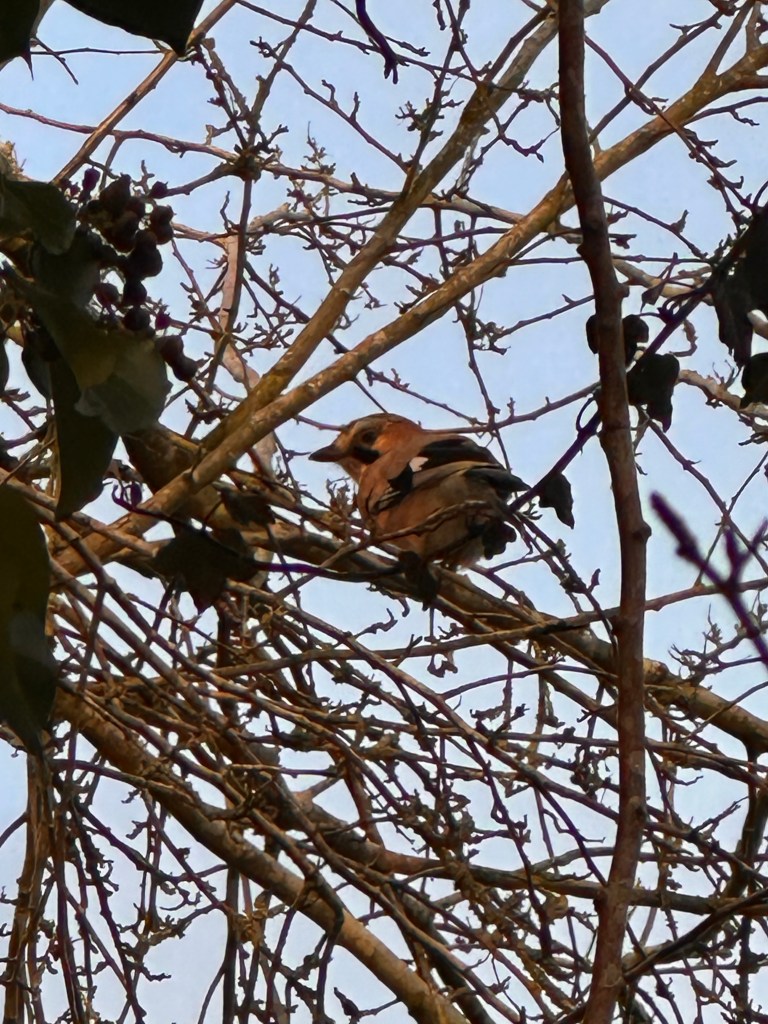
However… if you’ve ever been startled by a harsh “skree” echoing through a woodland, chances are you’ve just met the Eurasian jay (Garrulus glandarius). This bird is far cleverer and far more colourful than its shy reputation suggests.
At first glance it looks a light brown but when it starts flying it reveals a brig ht blue and black barred wing patch. It is about 35cm in length and has a wingspan of 52-58cm and can live up to 15-18 years in the wild. They mainly live in deciduous or mixed forests, but are fairly adaptable to urban edges and parks etc.
Jays might be most known for their special relationship with oak trees, a single jay can hide thousands of acorns each autumn. They remember many of these hiding spots months later. Forgotten acorns often germinate, making jays accidental forest gardeners In fact, ecologists credit jays with helping oak forests spread northward after the last Ice Age. Helping forge Europes forests all those years ago.
As members of the crow family, jays are extremely intelligent. They can imitate the calls of other birds, and even human-made sounds. Jays have been observed re-hiding food if they think another bird is watching. They recognise individual humans and can remember who is “safe” and who isn’t… Basically: if a jay is yelling at you, it’s probably on purpose.
Despite being noisy and sometimes unpopular, Eurasian jays are vital to forest ecosystems. They spread trees, warn other animals of danger, and demonstrate just how complex bird intelligence can be.
 Oli's Ecology Blog
Leave a comment