Deadwood, although immediately ignored is s far more important recourse to a forest biome than one might think. Microhabitats themselves increase biodiversity greatly and thousands of invertebrate species rely on deadwood. There are even multiple types of deadwood and uses of them.
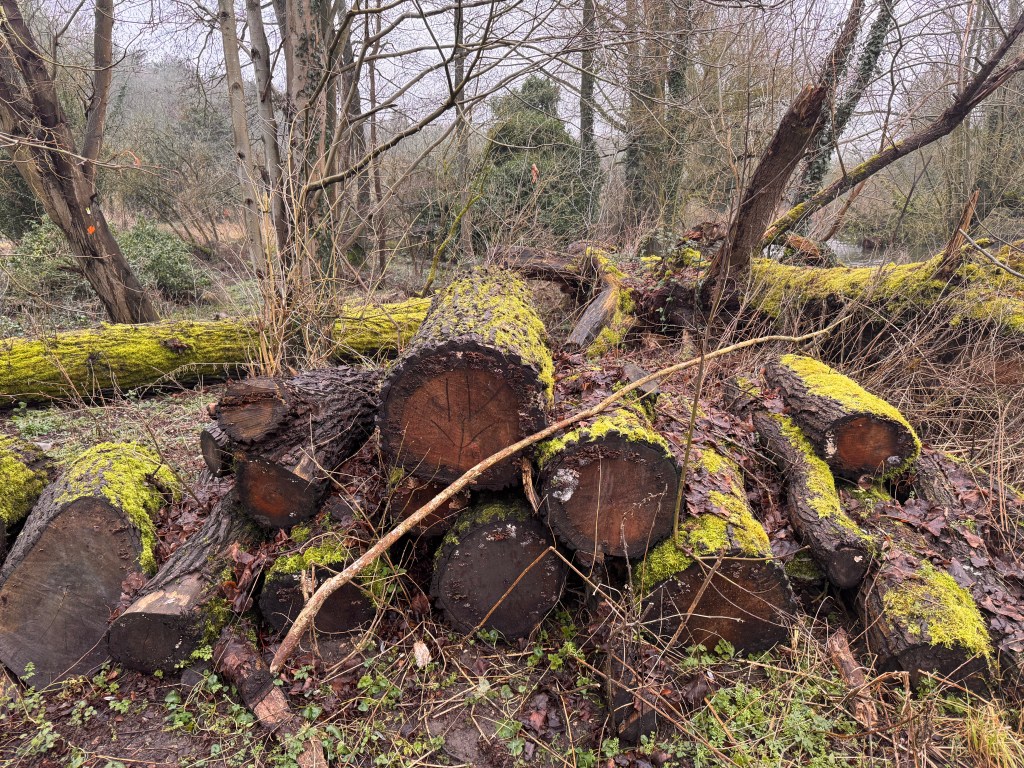
Stacks and piles of deadwood are fairly simple and often leftover from management techniques such as coppicing and pollarding or other. Some trees fall and are hazardous and some need to be felled anyway, afterwards they are cut up and stacked like *image above*. Alternatively, some trees can be left naturally, in-situ after falling.
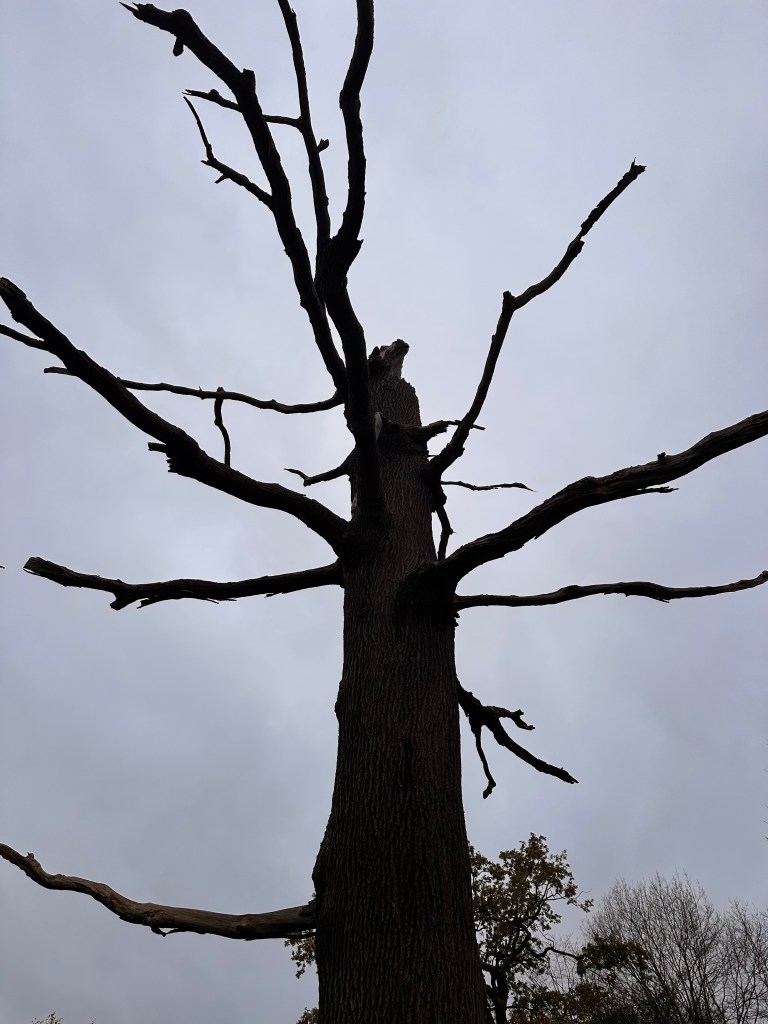
Standing deadwood, or just veteran trees commonly known as snag trees. These trees create individual habitats, the decaying bark is used by bats for roosting sites, and many other birds and small mammals make holes in the loose bark, decaying heartwood is utilised by invertebrates for food and nutrients.
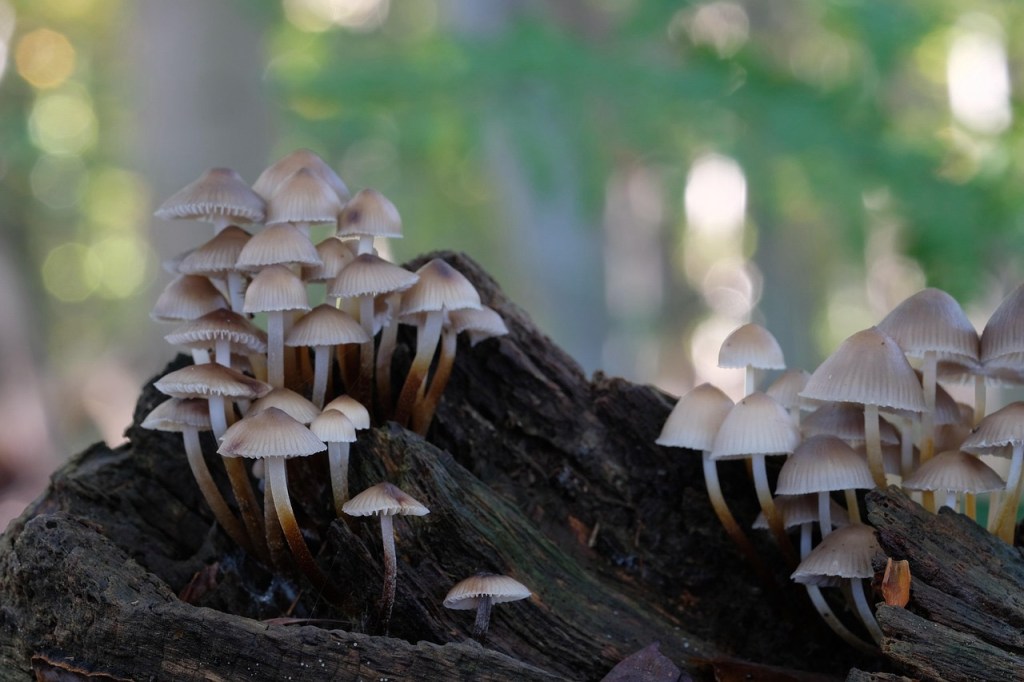
Fungi, lichens and mosses also like to colonise the decomposing environment.
Deadwood is considered a crucial part of forest ecosystems, mining its promotion of biodiversity and its ecosystem services. Deadwood provides a role in processes such as soil formation and nutrient cycling. It supports up go a fifth of woodland species, depending on the dying wood, to complete their life cycles. Such as the stag beetle, many of these species would dramatically decline without deadwood recourses.
Nearly 2,000 UK species are saproxylic “dependant on dead wood” and a large food web is mainly driven by fungi within dead wood. Maintaining this beneficial environment is very simple and requires very little management. Whenever something is deemed as dangerous or hazardous for the survival of deadwood habitats it is removed, otherwise they are left to their own devices.
 Oli's Ecology Blog
Leave a comment