In the UK, Cambridge, Thriplow I witnessed the very moment a barrage of barn swallows swept over a brush of trees and dived into the very same stable-barn that they return to every year, the date was 8/4/2026.
The ‘barn’ swallow (Hirundo rustica) is the most widespread species of swallow in the world, occurring on all continents and even has sightings in Antarctica!
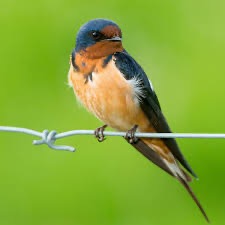
Barn swallows typically nest in human made structures as per their name, they love barns. The species has consequentially spread with human expansion and thrives within human civilisation. They feed mostly on ants and do not disturb humans at all, except for making a bit of a mess. You’ll find a good clean of your barn an arduous task.
The adult male barn swallow is 17–19 cm long including 2–7 cm of elongated outer tail feathers. It has a wingspan of 32–34.5 cm and weighs 16–22 g. It is steely blue with an orange/peach faded chest down to their outer tail feathers. It has a darker orange face and moustache with occasional small plumes of white and black. Its outer tail forks into the distinctive “swallow tail”, and makes them easy to recognise when flying.
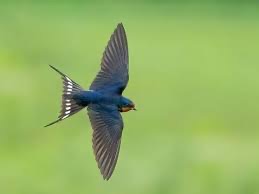
The female is similar in appearance to the male, but the tail streamers are shorter, the blue of the upperparts and breast band is less glossy, and the underparts paler. The preferred habitat of the barn swallow is open country with low vegetation, such as meadows and farmland, human settlement also is popular due to water sources (troughs etc). This swallow avoids heavily wooded or precipitous areas and densely built-up locations. The presence of accessible open structures such as barns, stables to provide nesting sites, and exposed locations such as roof ridges or bare branches for perching, are also important in the bird’s selection of its breeding range.
Barn swallows are semi-colonial and most of the time, year after year will return to the same breeding site because it takes around 2 weeks for a pair to build a nest from mud, hair, and other materials, so old nests are highly prized.
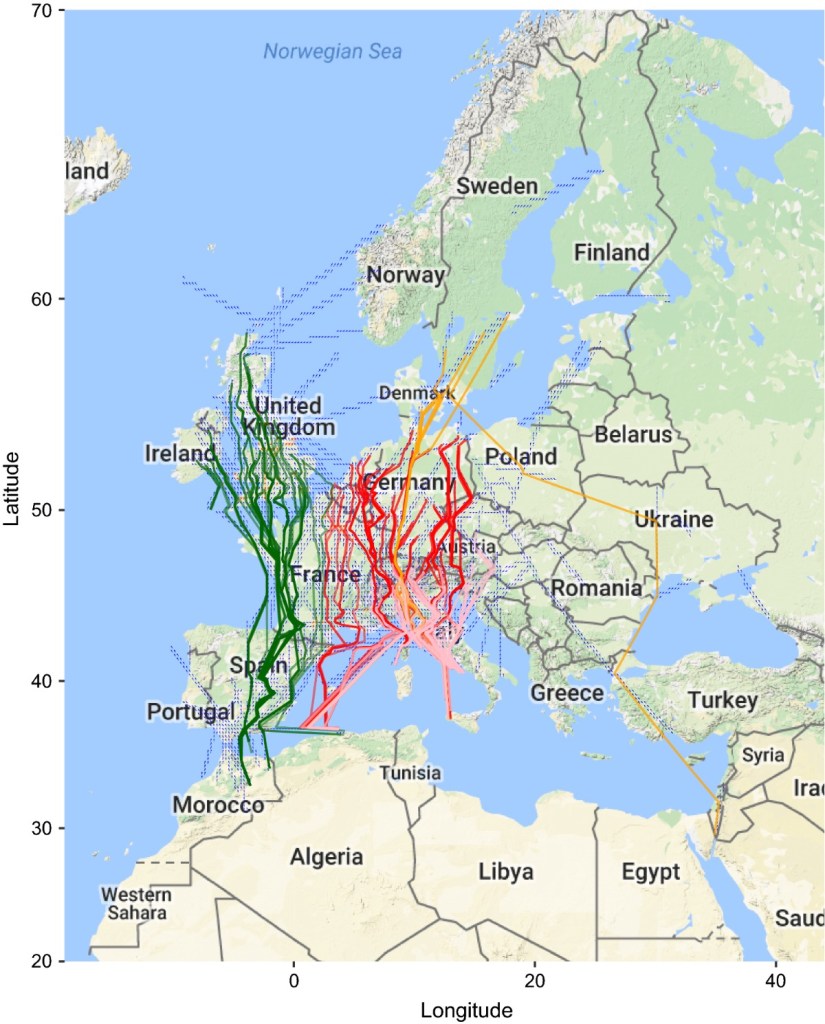
Most of the Barn swallows in the UK have come from Southern Spain/Northern Morocco and arrive early-mid April. In the colder months barn swallows move to warm forest/Mediterranean regions or deserts to enjoy the hotter weather.
 Oli's Ecology Blog
Leave a comment